
English
English
Views: 0 Author: Site Editor Publish Time: 2025-12-10 Origin: Site


When selecting an SCR power regulator for industrial applications, it’s important to understand the terminology and technology behind these devices. The market offers a variety of products—some labeled as “SCR AC voltage regulators,” others as “SCR power regulators” or “SCR power controllers”—but the distinctions are often subtle and can be confusing. This guide will clarify these terms and help buyers choose the most suitable product for their needs.
An SCR power regulator (also called an SCR power controller) is a device that uses silicon-controlled rectifiers (SCRs or thyristors) to precisely control the amount of electrical power delivered to a load. Modern SCR power regulators can operate in multiple modes, including:
Phase-angle control: Adjusts the output voltage by changing the conduction angle of the SCR. This is equivalent to what was traditionally called an “SCR AC voltage regulator.”
Zero-cross or burst firing: Controls power by switching full AC cycles on and off, which is ideal for reducing harmonics and improving efficiency.

SCR AC Voltage Regulator: This term typically refers to a device that uses phase-angle control to regulate AC voltage. In modern practice, this function is usually just one mode of operation within a broader SCR power regulator.
SCR Power Regulator/Controller: This is a more comprehensive device that can include phase-angle control, zero-cross control, and additional features such as closed-loop power or temperature regulation, communication interfaces, and advanced protection circuits.
Simple Voltage Control: If your application requires basic voltage regulation for stable resistive loads (like heaters), a product that supports phase-angle control will suffice. Many SCR power regulators offer this as a standard mode.
Advanced Power Regulation: For applications requiring precise power or temperature control, dynamic load compensation, or integration with PLCs and IoT systems, choose an SCR power regulator with multiple control modes and smart features.
Efficiency and Compatibility: Look for regulators that minimize harmonic distortion and offer high efficiency (often above 99%). Ensure the device is compatible with your load type (resistive, inductive, or capacitive) and control requirements.
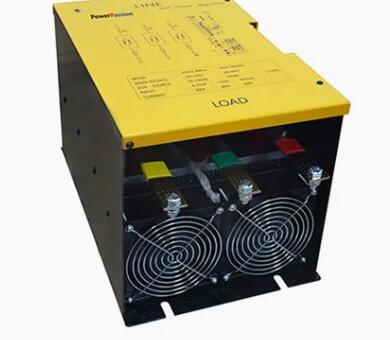
Traditional “SCR AC voltage regulators” are now typically integrated into modern SCR power regulators as a control mode.
A true SCR power regulator offers more flexibility, efficiency, and advanced features for demanding industrial applications.
Always check the device specifications to confirm which control modes and features are supported, ensuring optimal performance for your specific use case.
By understanding these distinctions, buyers can select an SCR power regulator that best meets their technical requirements and operational goals.
Unsure which type of equipment is right for your device? Contact us, and our engineers will provide a free selection plan based on your load type, accuracy requirements, and budget – ensuring you choose the right equipment and make the most of every kilowatt-hour of electricity.


