
English
English
Views: 0 Author: Site Editor Publish Time: 2026-02-06 Origin: Site


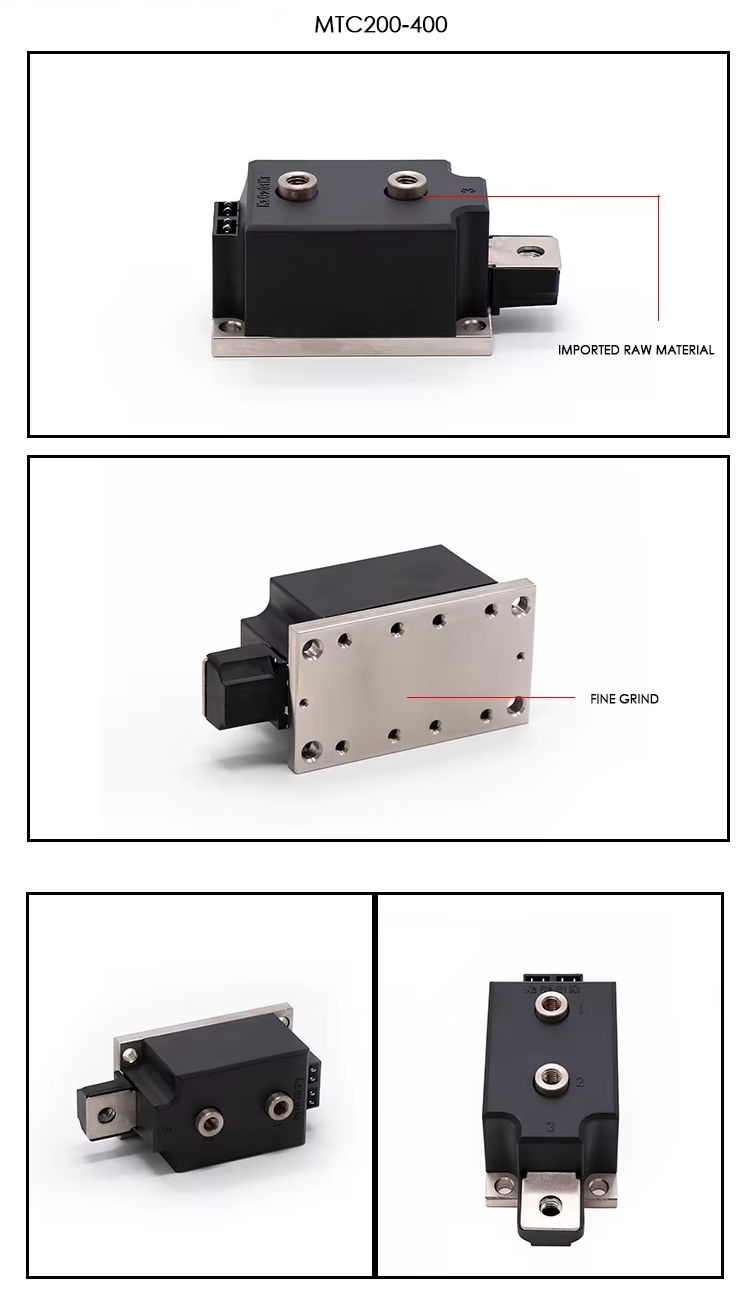
In the rapidly evolving landscape of power electronics, the Thyristor Module (also known as the SCR module) has emerged as a cornerstone for modern industrial systems. As a high-power semiconductor device, its ability to precisely control electrical current has made it indispensable for motor speed control and soft starting applications. For industries looking to enhance efficiency and longevity of their equipment, understanding the role of thyristors is key to achieving "Green Manufacturing" and Industry 4.0 standards.
Traditional methods of motor speed regulation, such as mechanical rheostats, often suffer from low efficiency and slow response times. The integration of thyristor modules has marked a leap from mechanical to electronic control.
Principle of Operation: By adjusting the trigger angle (phase angle), thyristors dynamically control the conduction time of the current. This allows for a seamless adjustment of the voltage or current effective value.
Key Advantages:
Microsecond Response: Achieve near-instantaneous speed adjustments.
High Precision: Control accuracy can reach up to ±0.1%, far exceeding traditional systems.
Wide Range: In DC motor applications, thyristors paired with controllable rectifier circuits can achieve a speed regulation range of over 1:1000.
One of the biggest challenges in motor operation is the initial startup. Direct starting can generate currents 4 to 7 times the rated value, leading to grid instability and mechanical wear.
Thyristor modules utilize "Voltage Ramp Control" to solve this:
Smooth Acceleration: The input voltage increases linearly from zero, limiting the starting current to within 2-3 times the rated value.
Grid Protection: Keeps voltage fluctuation within 10%, preventing interference with other equipment on the same network.
Energy Savings: During light-load operations, reducing the voltage can improve the power factor by 15% to 20%.
Note from Zibo Zhenggao: Modern thyristor units often integrate additional features like soft-stop, overload protection, and phase-loss protection into a single intelligent control unit.
The next generation of thyristor modules is trending towards higher performance and IoT integration:
Advanced Materials: New materials are pushing switching speeds into the nanosecond range while reducing energy loss by over 30%.
Smart Integration: Future modules combine trigger circuits, protection circuits, and power devices into a single, compact unit—reducing size by 50% while significantly increasing reliability.
Remote Monitoring: Through IoT technology, these modules now support remote fault diagnosis and adaptive control, making them vital for renewable energy and electric vehicle (EV) infrastructure.
As a leading manufacturer of power semiconductor solutions, we recognize that the Thyristor Module is more than just a component; it is a catalyst for industrial transformation. Whether you are looking to optimize an existing motor system or design a new automated production line, choosing the right thyristor technology is essential for efficiency and sustainability.
