English
English
Views: 0 Author: Site Editor Publish Time: 2025-12-15 Origin: Site


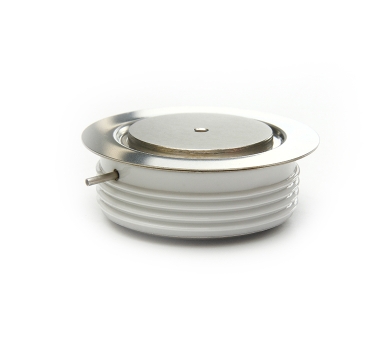
Capsule type power devices, in a "capsule-shaped," pressure-resistant, and heat-dissipation-optimized package structure to ensure reliable operation under high current, high voltage, and thermal stress conditions. The key characteristics and applications are described below.often referred to as "press-pack / capsule / disc / stud-mount / capsule type" in manufacturer naming conventions; many manufacturers offer similar packaging for high-voltage IGBTs, thyristors, rectifiers, and SiC devices, but the specific model names vary significantly.
Main Features
Package Form: The shape resembles a small metal or composite "capsule/cylinder," with the chip fixed inside and filled with thermal conductive material or epoxy resin to enhance mechanical and thermal performance.
Heat Dissipation Capability: Direct contact with the cooling system (heat sink, cold plate) through a metal base, thick copper leads, or casing improves thermal resistance and heat conduction efficiency.
Electrical Performance: Supports high voltage/high current, low on-resistance, and low switching losses; the package design often reduces parasitic inductance and capacitance to facilitate fast switching.
Mechanical and Environmental Strength: Vibration-resistant, thermal cycle resistant, and moisture-proof, suitable for harsh industrial or automotive environments.
Pins/Interfaces: Typically provides robust current output terminals and reliable soldering/bolted connection surfaces for easy high-current connection and modular assembly.
Based on the basic functions and application scenarios of electronic components, our capsule-type power semiconductors fall into the following categories:

1. ZP-type ordinary rectifier diode
Core function: A unidirectional conductive semiconductor component that only allows current to flow from the anode to the cathode, converting alternating current (AC) to direct current (DC), achieving "rectification," and without a control terminal (cannot actively control conduction/cutoff).
Key features: Simple structure, high reliability, naturally conducts/cuts off only depending on the polarity of the input voltage, and cannot adjust the conduction time through external signals.
Typical applications: Commonly used in low-precision rectification scenarios, such as rectifier circuits in power supply equipment, battery charging circuits, electroplating power supplies, etc., as a basic "AC-to-DC" conversion component.
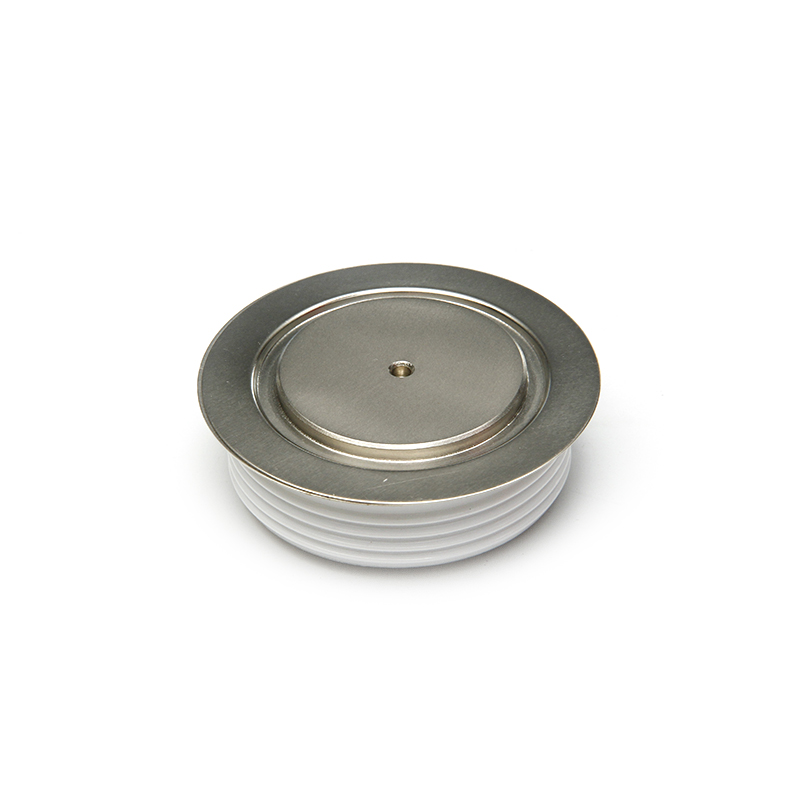
2. KP-type ordinary thyristor (SCR)
Core function: Unidirectional conductive and possesses "controllable conduction" characteristics. It conducts only when a forward voltage is applied to the anode and a trigger signal (such as a pulse current) is applied to the control terminal. Once conducting, it remains conducting even after the control signal is removed, and only turns off when the anode voltage reverses or the current drops below the "holding current."
Key features: The conduction time can be actively controlled, enabling "switching" and "voltage regulation" control of the current. It is a commonly used controllable switching component in industry.
Typical applications: Widely used in scenarios requiring controllable rectification, voltage regulation, and speed control, such as motor speed control systems, welding machines, dimming circuits, and power control of industrial heating equipment.
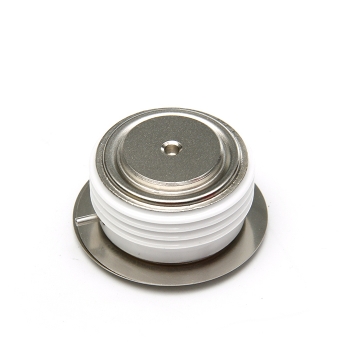
3. KS-type bidirectional thyristor
Core function: Bidirectional conductive and controllable, enabling conduction control in both the positive and negative half-cycles of alternating current (without distinguishing between anode and cathode). After a trigger signal is applied to the control terminal, it can conduct current in both directions. The turn-off condition is similar to the KP type (current below the holding current).
Key features: Simplifies the control structure of AC circuits, enabling bidirectional control of AC current without the need for anti-parallel components. The control logic is relatively complex but highly integrated.
Typical applications: Primarily used for controlling AC loads, such as household dimmer switches, fan speed controllers, AC motor forward and reverse control, and solid-state relays (SSR).